
Chester step test
What is the Chester Step Test for Offshore Workers?
The Chester Step Test is a submaximal aerobic assessment designed to estimate an individual’s cardiorespiratory fitness. Unlike more strenuous clinical evaluations, this test provides a reliable prediction of physical endurance without requiring the subject to reach their absolute physical limit.
It’s essentially a sophisticated, multi-stage modification of the original Harvard step test, refined specifically for modern occupational health settings. For those pursuing a career at sea or on remote energy assets, the chester step test for offshore workers serves as a vital gatekeeper.
It ensures that every technician possesses the physical resilience required for high-stakes environments where medical assistance may be hours away. Accuracy is paramount.
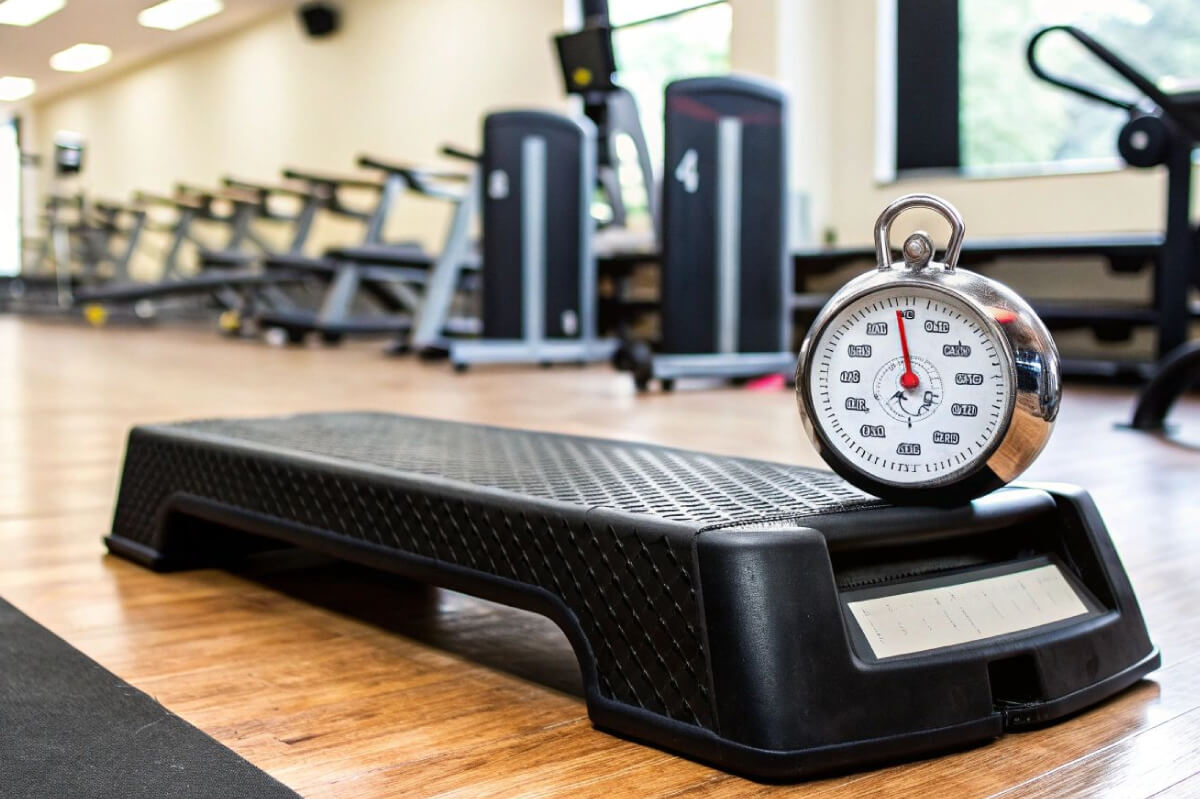
Preparing For The Test
- 2 hours before the test - avoid eating, smoking, exercise or drinking caffeine drinks such as tea, coffee or energy drinks.
- You should not be recovering from illness such as a cold (which can raise heart rate and reduce exercise capacity), or be taking beta blocker drugs which will depress heart rate scores.
- Wear loose‐fitting, comfortable clothing.
General guidelines for selecting the step height
- Steps are in the following sizes - 15, 20, 25 and 30cm Choice of step height depends on factors such as age, functional capability, activity level and degree of overweight
- 30cm Step ‐ is generally suitable for those under 40 years of age who take regular physical exercise and are used to moderately vigorous exertion.
- 15cm Step ‐ is generally suitable for those over 40 years of age who take little or no regular physical exercise and for those over‐40’s who are moderately overweight.
NB. For testing the over‐60s, the lower step height of 15 or 20cm are generally best suited
(taken from ASSIST Training Manual The Chester Step Test Chapter 2)
North East Offshore Medicals
We are conveniently located for easy access by car or public transport. We have free parking so you can avoid city centre parking hassles and long wait times. We provide rapid assessments for those in South Tyneside and throughout the North East. Most medical checkups take under 30 minutes. We issue electronic PDF certificates on the spot and offer evening and Saturday appointments.
Why Choose Us
At South Tyneside Offshore Medicals, we offer friendly and professional services to help you meet specific medical requirements, from OEUK, RUK and Chester step tests to fit to train and return to work medicals.
Short Notice Appointments
We understand that offshore deployment dates can change at a moment's notice. To support energy and maritime workers, our clinic prioritises short-notice and last-minute bookings for OEUK (formerly OGUK) medical assessments.
Competitive Pricing
At South Tyneside Offshore Medicals North East, we deliver tier-one offshore medical services designed to minimize your total cost of ownership while maximizing workforce uptime.
Fast and Efficient
Most medicals generally completed in under 30 minutes. We strive to help you pass your medicals on the day Where an unforeseeable issue is identified at the medical, we provide the opportunity to delay or reschedule Electronic Certificates issued in PDF format for ease of sharing
Book a Consultation
We aim to respond to all enquiries within 48 hours. If you need a quicker response please contact us via phone. 07977462121
FAQs
It’s an exercise response test, designed to test general fitness and is often a pre-requisite for working in roles such as a Wind Turbine Technician or Rope Access Level 3.
It forms part of the following medicals
- GWO / RUK Medical
- Emergency Response Team
- 2 hours before the test - avoid eating, smoking, exercise or drinking caffeine drinks such as tea, coffee or energy drinks.
- You should not be recovering from illness such as a cold (which can raise heart rate and reduce exercise capacity), or be taking beta blocker drugs which will depress heart rate scores.
- Wear loose‐fitting, comfortable clothing.
- Avoid any heavy physical exercise for at least 24 hour before the test.
The Chester Step Test may be inappropriate or require additional medical information for those that answer yes to any of the following:
- Has your doctor ever said you have heart trouble?
- Do you frequently suffer from pains in your chest?
- Do you feel faint or have spells of severe dizziness?
- Has a doctor ever told you that your blood pressure is high?
- Has a doctor ever told you that you have a bone or joint problem such as arthritis that has been aggravated by exercise, or might be made worse with exercise?
- Is there a good reason not mentioned here why you should not follow an activity programme even if you wanted to?
- Are you over 65 and not accustomed to vigorous exercise?
Steps are in the following sizes - 15, 20, 25 and 30cm
Choice of step height depends on factors such as age, functional capability, activity level and degree of overweight
30cm Step ‐ is generally suitable for those under 40 years of age who take regular physical exercise and are used to moderately vigorous exertion.
15cm Step ‐ is generally suitable for those over 40 years of age who take little or no regular physical exercise and for those over‐40’s who are moderately overweight.
NB. For testing the over‐60s, the lower step height of 15 or 20cm are generally best suited
(taken from ASSIST Training Manual The Chester Step Test Chapter 2)
Yes. The Chester Step Test is a sub-maximal assessment, meaning it does not require you to exercise to exhaustion. It is widely used in occupational health due to its safety profile, provided it is conducted by trained professionals following appropriate screening.
Wind turbine technicians are required to climb significant heights and operate in physically demanding environments. The test helps assess whether individuals have sufficient cardiovascular fitness to safely carry out these duties and manage emergency scenarios, including evacuation or rescue. To meet the physical capacity requirements for wind turbine work, the acceptable threshold determined by a step test is an estimated minimum VO2max of 35 ml/kg/min
The test has up to 5 stages of 2 minutes each - each at a faster speed than the previous
Providing your heart rate is below 80% of your maximum heart rate and the Rate of Perceived Exertion (RPE) is below 14 (Hard) at the end of the stage you will then be permitted to continue on to the next stage
If at any stage you show signs of over-tiredness or dizziness, the test is stopped to allow recovery and cooling down
The following video gives a good guide of what to expect
If you are unable to complete the test, the assessing clinician will interpret the findings in the context of your role and overall health. This does not automatically mean you are unfit for work; however, it may lead to:
- Further assessment
- Temporary restrictions
- Referral for additional evaluation
If you are taking any regular medications, please contact the clinic before booking your test. Certain medications, particularly Beta-blockers (e.g., Bisoprolol, Atenolol, Propranolol), prevent the heart rate from rising naturally during exercise. This makes the results of the Chester Step Test clinically invalid and potentially unsafe to interpret.